

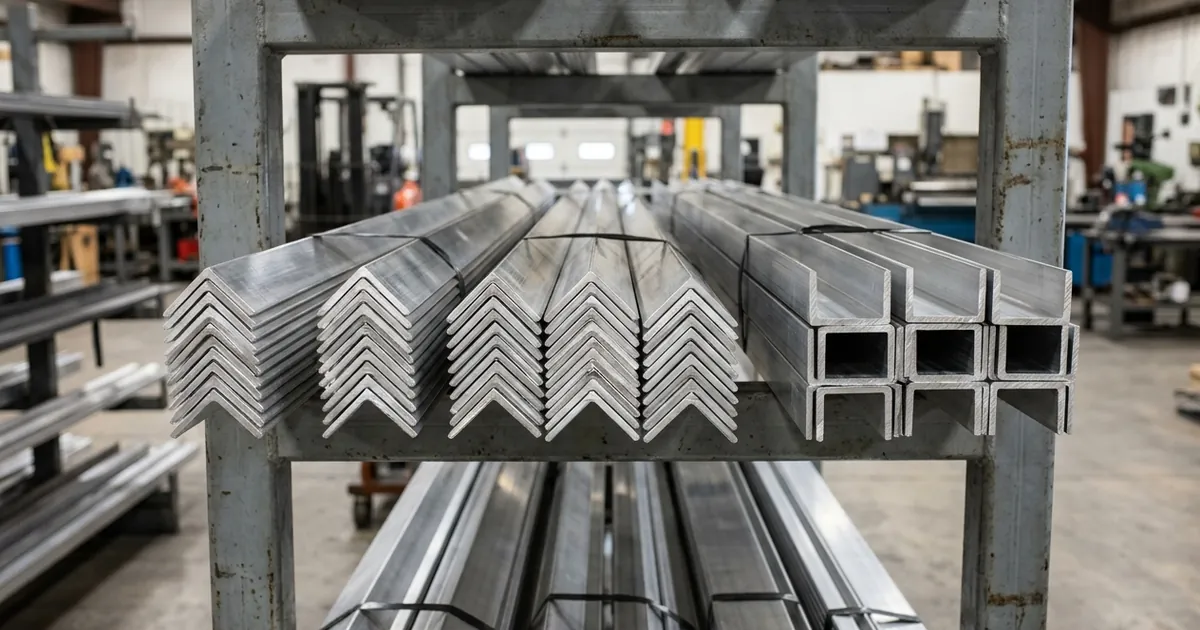
When designing wide-span architectural structures—such as skylight canopies, curtain wall horizontal transoms, pharmaceutical cleanroom walkable ceiling grids, and overhead conveyor tracks—structural engineers increasingly replace heavy mild steel with extruded aluminium T-sections and I-beams.
Steel I-beams require heavy motorized cranes for installation, extensive surface priming, and periodic rust maintenance. In contrast, Jindal Aluminium structural extrusions combine light deadweight, impressive second moment of area (rigidity against sagging), and complete immunity to monsoon corrosion.
Understanding how flange width, web height, and stem thickness relate allows structural contractors to build safe, rigid frameworks while keeping material procurement costs lean.
T-Sections vs I-Beams: Structural Mechanics Compared
1. Extruded T-Sections (Tees)
Features a flat horizontal top flange and a central vertical downward stem (web).
- Best For: Cleanroom suspended ceiling grids, glass canopy rafters, acoustic panel runners, and structural corner stiffeners.
- Key Advantage: The horizontal flange creates a flat resting shelf for acoustic ceiling tiles or glass panels on both sides.
2. Extruded I-Beams (H-Sections)
Features symmetrical top and bottom horizontal flanges joined by a central vertical web.
- Best For: Horizontal load-bearing beams, solar carport purlins, overhead crane trolley tracks, and equipment platforms.
- Key Advantage: Highest bending resistance along the major vertical axis, preventing sag across long unsupported spans.
Standard Dimensions & Application Reference Matrix
Below is a dimensional reference table for popular Jindal Aluminium T-sections and I-beams available in Delhi NCR:
| Structural Profile Type | Flange Width (A) × Web Height (B) in mm | Nominal Thickness (T in mm) | Primary Architectural Application |
|---|---|---|---|
| Light Architectural Tee | 25.4 × 25.4 mm (1.0" × 1.0") | 1.60 to 2.00 mm | Acoustic baffle ceiling runners, decorative wall grid trims |
| Medium Architectural Tee | 38.1 × 38.1 mm (1.5" × 1.5") | 2.00 to 3.00 mm | Cleanroom ceiling tile support grids, glass skylight glazing bars |
| Heavy Structural Tee | 50.8 × 50.8 mm (2.0" × 2.0") | 3.00 to 4.50 mm | Commercial entrance canopy purlins, solar panel mounting rafters |
| Architectural I-Beam | 50.0 mm Flange × 75.0 mm Web Height | 3.00 to 4.00 mm | Curtain wall transoms, overhead sliding door support beams |
| Heavy Structural I-Beam | 75.0 mm Flange × 100.0 mm Web Height | 4.50 to 6.00 mm | Walkway bridge framing, industrial mezzanine sub-beams, hoist rails |
4 Key Advantages of Aluminium Beams Over Steel
1. Rapid Crane-Free Erection
Because aluminium sections weigh nearly 65% less than equivalent steel girders, two fabricators can manually hoist and position aluminium I-beams without requiring costly mobile crane rentals or heavy scaffolding.
2. Zero Painting & Galvanising Maintenance
Exposed steel canopies require periodic scraping, red-oxide primer coats, and enamel repainting to fight rust. Extruded aluminium forms a permanent self-healing oxide barrier that never flakes or blisters under outdoor UV sunlight.
3. Cleanroom Hygiene Compliance
Pharmaceutical manufacturing facilities and semiconductor cleanrooms require dust-free environments. Anodized aluminium T-sections do not generate paint dust or rust particulate, making them mandatory for ISO cleanroom ceiling grids.
4. Straightness & Precision Tolerances
Unlike hot-rolled structural steel beams which often suffer from mill camber, sweep, and uneven web thickness, Jindal extruded aluminium beams exhibit crisp, straight profiles conforming to IS:3965 dimensional tolerances.
Frequently Asked Questions
What standard lengths are Jindal T-sections and I-beams available in?
Standard stock lengths are 3.66 meters (12 feet) and 4.88 meters (16 feet). Imperial Metal Mart can also source mill-direct 6.0-meter lengths for large architectural projects.
Can aluminium T-sections be powder-coated in custom RAL shades?
Yes. T-sections and I-beams can be supplied in Mill Finish, Natural Anodized (15-25μ), or electrostatically powder-coated in standard architectural shades like Pure White (RAL 9016), Anthracite Grey (RAL 7016), and Jet Black (RAL 9005).
Where can contractors buy genuine Jindal structural beams in Delhi NCR?
Imperial Metal Mart stocks certified Jindal Aluminium structural T-sections, angles, channels, and I-beams at our central depot in Paharganj, New Delhi, serving contractors across Delhi, Noida, Gurgaon, and Haryana.
Source Structural Extrusions in Delhi NCR
Imperial Metal Mart is your trusted wholesale distributor for Jindal Aluminium structural T-sections, angles, channels, and extruded I-beams with fast dispatch and ready inventory.