

In modern commercial real estate across Gurgaon, Noida, and Mumbai, skyscraper towers soaring 20 to 50+ stories high can no longer be clad using conventional "stick-built" curtain walls.
Stick curtain walls require miles of exterior scaffolding, site-applied wet structural silicone sealants subject to rain delays, and dangerous exterior worker rigging at extreme heights.
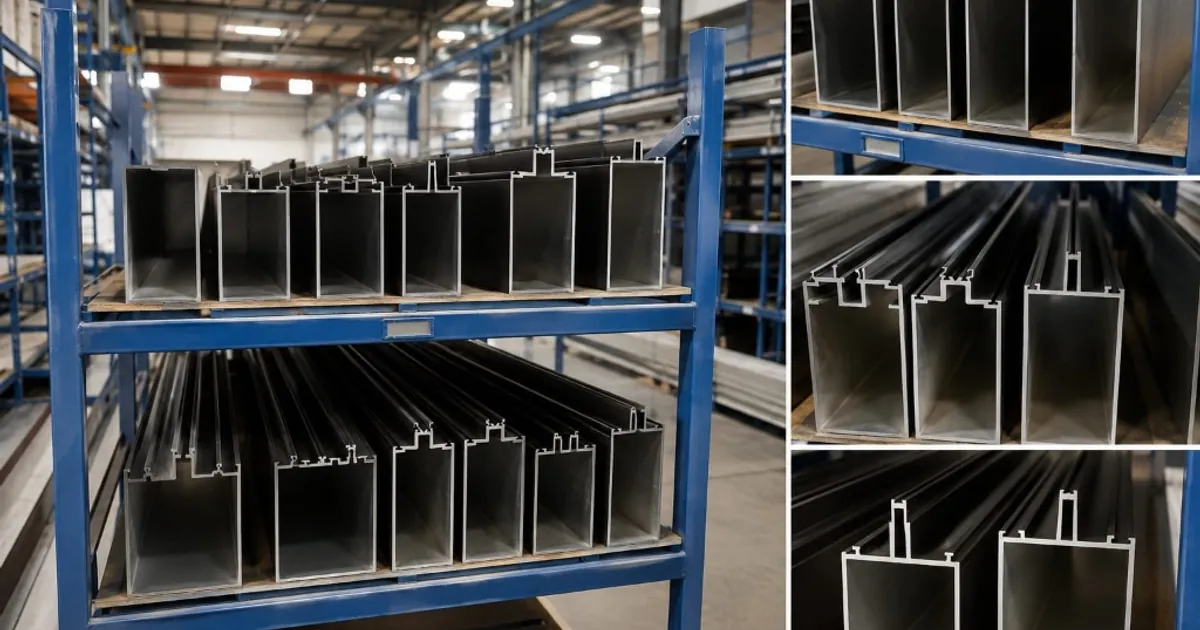
To build high-rise envelopes safely and rapidly, modern facade contractors exclusively specify factory-prefabricated Jindal Aluminium unitized curtain wall sections. Floor-height vision glass panels are assembled, glazed, and silicone-cured under strict factory quality control, then hoisted into position from the floor slab above, snapping together seamlessly using precision interlocking split male and female vertical mullions.
How Split Mullions Work: The Male-Female Interlocking Joint
1. Male and Female Split Profiles
Instead of a solid monolithic vertical tube, each unitized panel has a half-mullion on each side: a protruding "male" profile on one edge and a receiving "female" channel on the other.
Primary Mechanism: When adjacent panels are lowered into position, the male tongue slides into the female pocket, automatically creating a structural combined vertical mullion with zero exterior scaffolding needed.
2. Pressure-Equalized Rainscreen Cavity
Features three distinct internal chambers separated by heavy EPDM compression weatherstrips.
Primary Mechanism: The central air cavity is vented to the exterior, neutralizing air pressure between the outside atmosphere and inside chamber. Because air pressure is equal, wind cannot force rainwater across the inner air barrier.
3. Inter-Story Seismic Drift Movement
High-rise concrete structures experience sway under intense cyclone wind gusts and seismic ground vibrations.
Primary Mechanism: The male-female joint allows 15mm to 25mm of lateral and vertical slip movement, preventing glass panels from cracking or popping out during building flex.
4. Thermal Break Polyamide Cavities
Extruded profiles incorporate dual 24mm to 34mm structural polyamide thermal insulator strips.
Primary Mechanism: Completely separates the exterior aluminium skin from the interior room framework, reducing facade U-values and slashing HVAC air-conditioning power consumption in glass towers.
Standard Unitized Curtain Wall Sizing Matrix
Below is a dimensional reference table detailing unitized curtain wall extrusions commonly engineered for commercial high-rises in India:
| Unitized Profile Component | Sightline Width × Depth (mm) | Nominal Wall Gauge (mm) | High-Rise Wind Load Application |
|---|---|---|---|
| Slim Split Mullion Suite | 50.0 mm Sightline × 150.0 mm Depth | 2.50 to 3.00 mm | Mid-rise commercial towers (up to 15 floors, 1.5 kPa wind load) |
| Standard High-Rise Mullion | 65.0 mm Sightline × 180.0 mm Depth | 2.80 to 3.50 mm | Commercial office towers (15 to 35 floors, 2.0 to 2.5 kPa wind load) |
| Heavy Skyscraper Mullion | 75.0 mm Sightline × 220.0 mm Depth | 3.20 to 4.00 mm | Super-tall towers & coastal high-rises (35+ floors, 3.0+ kPa wind load) |
| Interlocking Stack Transom | Horizontal Stack Joint (65 × 120 mm) | 2.50 to 3.00 mm | Floor-to-floor horizontal stack joint with internal drainage gutter |
| Structural Floor Anchor Bracket | 150.0 × 100.0 mm Heavy Extruded Angle | 6.00 to 8.00 mm | Heavy cast-in channel anchor bolting unitized panels to concrete slabs |
4 Reasons Why Developers Choose Unitized Over Stick Curtain Walls
1. 3x Faster Building Enclosure
A small crew of 5 installers can hoist and install 40 to 60 pre-glazed unitized panels per day directly from inside the building, allowing interior trade work (flooring, MEP, drywall) to begin months earlier.
2. Zero Exterior Scaffolding Cost
Eliminates millions of rupees spent on hiring and erecting 30-story exterior scaffolding or cradle platforms, removing major safety and fire liability risks on site.
3. Factory-Controlled Silicone Curing
Two-part structural silicone sealants cure inside temperature- and humidity-controlled factory cleanrooms, guaranteeing 100% bond adhesion to glass and metal without dust contamination.
4. Severe Wind & Water Test Compliance
Unitized systems pass stringent laboratory performance mock-up tests (ASTM E283, ASTM E331, AAMA 501.1 dynamic water tests) under intense simulated hurricane conditions.
Frequently Asked Questions
What alloy and temper are unitized curtain wall extrusions produced in?
Jindal unitized curtain wall profiles are extruded in certified architectural 6063-T6 or high-strength structural 6061-T6, ensuring high tensile yield strength to resist intense negative wind suction forces at high altitudes.
What standard lengths are unitized mullion extrusions supplied in?
Jindal mullion sections are supplied in standard mill lengths of 3.66 meters (12 feet), 4.88 meters (16 feet), and 6.0 meters (20 feet) to match typical commercial floor-to-floor heights without intermediate splice joints.
Can Imperial Metal Mart supply custom curtain wall dies in Delhi NCR?
Yes. In addition to stocking standard curtain wall transoms and mullions in Paharganj, New Delhi, Imperial Metal Mart facilitates mill-direct custom die tooling development with Jindal Aluminium Ltd for multi-tonne commercial high-rise projects.
Source Curtain Wall Sections in Delhi NCR
Imperial Metal Mart is your authorised Jindal Aluminium distributor for high-rise curtain wall profiles, structural mullions, transoms, and heavy brackets with wholesale pricing.