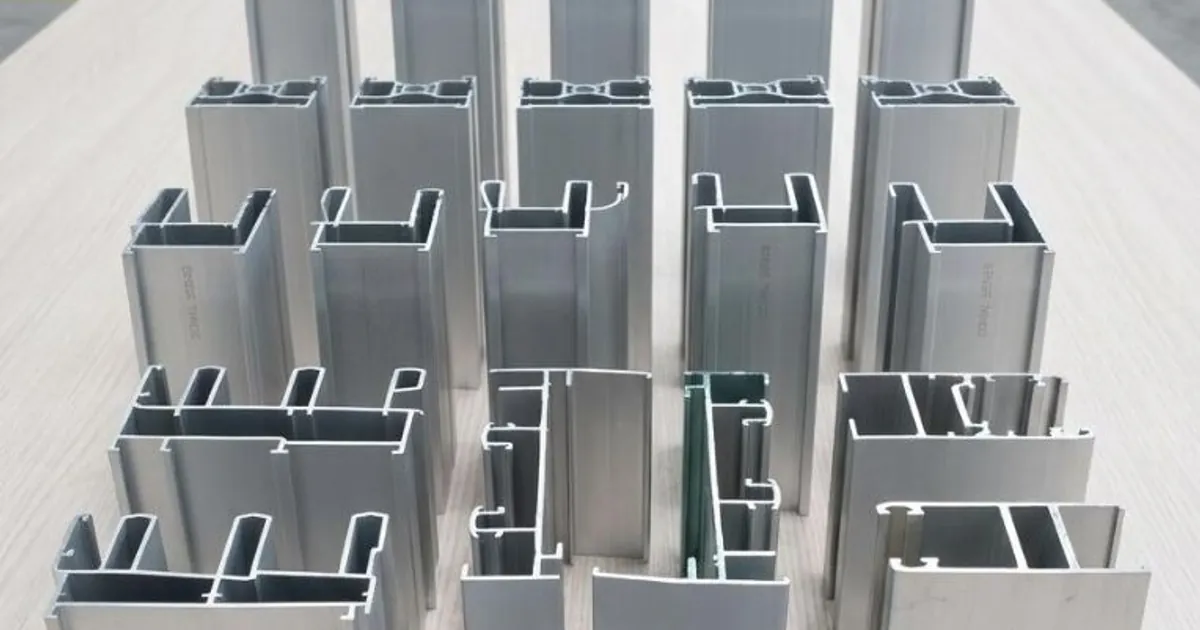
While aluminium is naturally corrosion-resistant compared to ferrous metals, bare mill-finish aluminium exposed to atmospheric oxygen forms a thin, irregular oxide layer that readily oxidizes, water-spots, and gathers grime. To ensure structural longevity and aesthetic prestige, architectural profiles must undergo surface finishing.
When specifying luxury Domal window sections, curtain wall facades, or modern office partitions, architects and developers face a defining choice: Anodizing or Powder Coating?
Both treatments have transformed contemporary architecture, yet they operate on entirely different metallurgical and chemical principles. Choosing the wrong finish for your localized environment—such as the intense UV sunlight and high particulate pollution of Delhi NCR or humid coastal air—can lead to chalking, peeling, and premature aesthetic degradation.
1. What is Anodizing? The Chemistry of Integral Oxidation
Unlike applied paints or coatings that sit on top of the substrate, anodizing is an electrochemical conversion process. The aluminium extrusion is submerged in an acid electrolyte bath (typically sulfuric acid) while an electrical current is passed through it. The aluminium profile serves as the anode (+).
This process releases oxygen ions at the surface, reacting with the aluminium to grow a dense, crystalline aluminium oxide (Al₂O₃) ceramic layer directly out of the metal matrix.
- Integral Bond: Because the oxide layer is grown from within the substrate, it can never flake, peel, blister, or delaminate. It is physically part of the metal.
- Extreme Surface Hardness: Crystalline aluminium oxide approaches the hardness of sapphire (9 on the Mohs scale), imparting phenomenal abrasion and scratch resistance.
- Architectural Micron Thickness: Standard indoor anodizing is 10–15 microns (IS 1868 Grade AA15). Exterior architectural and severe urban installations require 20 to 25 microns (Grade AA25).
- Color Palette: Traditionally metallic: Natural Silver (Matte / Satin), Champagne, Electro-Bronze, and Deep Jet Black.
2. What is Powder Coating? The Power of Cured Polymer Films
Powder coating is a dry finishing process. Finely ground particles of pigment and protective polymer resin (typically architectural-grade polyester or fluoropolymer) are electrostatically charged and sprayed onto grounded aluminium profiles.
The coated profiles are then conveyed into high-temperature curing ovens heated to 180°C to 200°C. Under this heat, the dry powder melts, flows, and chemically cross-links into a continuous, non-porous polymer skin.
- Heavy Protective Barrier: Powder coating produces a thick protective envelope typically measuring 60 to 80 microns, nearly 4 times thicker than an anodized layer.
- Unlimited Colors & Textures: Access to the complete universal RAL color spectrum—from pristine pure whites (RAL 9010) and anthracite greys (RAL 7016) to textured metallic finishes and Italian sublimation wood grains.
- Chemical Immunity: The polymer skin is impervious to alkaline mortar, acidic plaster splashes, and common building site cement splatters during construction.
- Qualicoat Certification: Architectural specifications rely on Qualicoat Class 1 (standard 5-year Florida UV test) or Qualicoat Class 2 (Superdurable resin with 10-year UV gloss retention).
Comprehensive Head-to-Head Comparison Matrix
| Performance Metric | Anodized Finish (20-25µm) | Powder Coated Finish (60-80µm) |
|---|---|---|
| Bonding Mechanism | Integral molecular conversion (Will never peel or blister) | Mechanical / Chemical cross-linked polymer adhesion |
| Scratch & Wear Resistance | Exceptional (Ceramic sapphire hardness) | Good, but vulnerable to sharp metallic gouges |
| UV Radiation & Sunlight | 100% UV Immune (Inorganic oxide film does not degrade) | High (Class 2 superdurable powders resist chalking) |
| Resistance to Wet Cement & Mortar | Vulnerable (Alkaline cement stains porous unsealed oxide) | Impervious (Polymer resin easily wiped clean) |
| Aesthetic Options | Metallic sheen (Natural, Bronze, Champagne, Black) | Endless RAL shades, matte textures, and wood grains |
| On-Site Touch-up & Repair | Difficult (Requires factory electrolytic re-anodizing) | Easy (Matching aerosol spray or color repair pens) |
| Environmental Life Expectancy | 30 to 50+ Years | 20 to 30+ Years (Class 2) |
Which Finish Should You Choose for Your Project?
Choose Anodized Profiles If:
- • You are constructing high-traffic sliding doors, staircase handrails, or shopfronts subject to heavy tactile wear and ring/key abrasion.
- • You desire the authentic, sleek cool metallic luminescence of raw aluminium.
- • The structure is in a severe industrial environment exposed to extreme heat or intense direct ultraviolet sunlight.
Choose Powder Coated Profiles If:
- • You need exact color-coordination with interior woodwork, curtain walls, or modern matte-black (RAL 9005) minimalist architecture.
- • You are building on an active construction site where wet cement, mortar splashes, and masonry dust are unavoidable during erection.
- • You want realistic Italian wooden grain sublimation finishes for luxury residential doors and fenestration.
Frequently Asked Questions
Can powder coated aluminium peel or chip off over time?
If extruded profiles undergo professional 7-tank or 9-tank chemical pre-treatment (chromating or eco-friendly nano-zirconium conversion) prior to powder application, the polymer bond is virtually unbreakable. Delamination only occurs when low-end local vendors spray powder directly onto greasy, unwashed mill-finish metal without proper baking.
How do I clean and maintain anodized aluminium window frames?
Wash periodically with a soft sponge, warm water, and mild pH-neutral car-wash or dishwashing soap. Never use acidic descaling cleaners, harsh caustic soda solutions, abrasive scouring pads, or wire brushes, as strong alkaline chemicals will etch the protective oxide layer.
Does Jindal Aluminium supply both anodized and powder coated sections directly?
Yes. Jindal operates world-class computerized vertical and horizontal powder coating plants alongside state-of-the-art automated anodizing lines, ensuring factory-controlled micron thicknesses conforming to international Qualicoat and Qualanod certifications.
Explore Our Finished Aluminium Profiles
Imperial Metal Mart supplies factory-certified Anodized, Powder-Coated, and Wood-Finish Jindal Aluminium profiles across Delhi NCR with full batch test certificates and zero under-gauging.