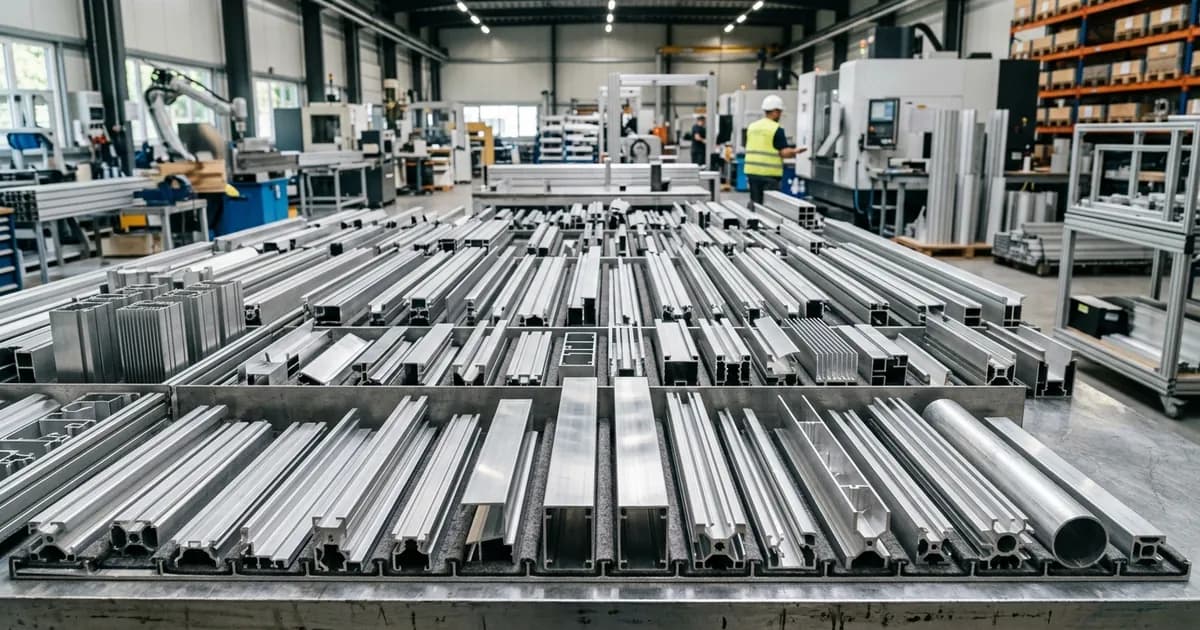
Look closely at the world around you, and you will undoubtedly see the profound impact of aluminium extrusion profiles. From the sleek frames of modern skyscraper windows piercing the skyline of Delhi NCR to the intricate heat sinks cooling your computer's processor, extruded aluminium is the hidden backbone of modern engineering and architecture.
In the rapidly evolving landscape of construction, manufacturing, and technology in 2026, the demand for lightweight, durable, and highly customizable materials has never been greater. India, and specifically the bustling construction hubs like Delhi, Gurgaon, and Noida, are witnessing an unprecedented boom in architectural innovation. Aluminium, with its unparalleled strength-to-weight ratio and natural corrosion resistance, has emerged as the material of choice for engineers and designers worldwide. However, it is the remarkable process of aluminium extrusion that truly unlocks the metal's potential, allowing it to be shaped into virtually any continuous cross-section imaginable.
In this comprehensive, deep-dive technical guide, we will explore the fascinating world of aluminium extrusion profiles. We will unpack the complex manufacturing process step-by-step, analyze the core mechanical properties that make these profiles so indispensable, categorize the different types of extrusions available in the market today, and examine their wide-ranging applications across multiple heavy and light industries. Whether you are an architect drafting the blueprint for a futuristic commercial complex in New Delhi, an engineer designing the chassis for a next-generation electric vehicle, or simply a procurement manager looking to expand your knowledge of material science, this article will provide you with everything you need to know about aluminium extrusion profiles.
1. What is Aluminium Extrusion? Understanding the Complex Manufacturing Process
To fully appreciate the vast versatility of aluminium profiles, one must first understand exactly how they are made. In simple terms, aluminium extrusion is a transformative manufacturing process used to create objects with a fixed, continuous cross-sectional profile. The process is frequently compared to squeezing toothpaste from a tube; just as the paste takes the exact shape of the circular opening, the heated, pliable aluminium takes the specific shape of the precisely machined steel die it is forced through under immense pressure.
The modern extrusion process employed by industry leaders like Jindal Aluminium is a highly controlled, technologically advanced operation that involves several critical, heavily monitored steps to ensure absolute precision:
- Billet Preparation and Heating: The process begins with a solid, cylindrical log of aluminium alloy, known as a billet. The billet is carefully preheated in a specialized induction or gas-fired furnace to a temperature typically between 400°C and 500°C (750°F to 930°F). At this precise thermal sweet spot, the aluminium is not molten; rather, it enters a plastic, highly malleable state. It is soft enough to be pushed and shaped but firm enough to retain its physical, metallurgical integrity.
- Lubrication and Transfer to the Press: Once the target temperature is accurately reached, a specialized smut or lubricant is applied to the billet and the extrusion ram. This acts as a crucial barrier to prevent the heated aluminium from sticking to the heavy steel machinery of the press. The heated billet is then transferred mechanically to the cradle of the heavy-duty extrusion press.
- The Extrusion Press and Die: A powerful hydraulic ram applies immense forward pressure (often ranging from 1,000 to over 15,000 tons of force, depending on the machine size and the complexity of the profile) to the back of the billet. This immense force pushes the softened metal through a steel container and forces it against the die. The die is a thick, highly engineered steel disk with one or more hollowed-out, complex shapes cut into it. As the aluminium is pushed through these precise openings, it emerges on the other side as a fully formed profile.
- Quenching and Cooling: As the newly formed extrusion profile exits the die, it is guided down a long runout table. Immediately upon exiting, the profile is cooled rapidly, a process known as quenching. Depending on the specific 6000-series alloy being used and the required temper, this is achieved using forced air fans, water mist sprays, or a full submersion water bath. Rapid, highly controlled cooling is essential to lock in the metallurgical properties and ensure long-term structural stability.
- Stretching and Straightening: Following the initial cooling process, the extruded lengths (which can be up to 50 meters long directly out of the press) inevitably have slight twists, bows, or bends. To correct this geometric distortion, they are moved to a stretching machine. Grippers hold both ends of the profile securely, and a calculated mechanical pull is applied, stretching the metal just past its yield point (usually by 1-2%). This not only straightens the profile perfectly but also aligns the internal grain structure, significantly increasing the metal's overall tensile strength.
- Cutting to Length and Artificial Aging: Finally, the extremely long profiles are sawed into standard commercial lengths (typically between 3 to 6 meters, or customized as per specific architectural orders in India). To achieve the final desired strength and hardness, the profiles are often placed in an industrial aging oven. This highly calibrated heat-treatment process (creating tempers such as T5 or T6) accelerates the natural aging of the alloy, yielding a final product that is incredibly robust, rigid, and ready for immediate industrial application.
2. Key Mechanical Properties of Extruded Aluminium Profiles
Why is extruded aluminium preferred over traditional steel, timber, or advanced reinforced plastics in so many modern applications? The answer lies in the unique, synergistic combination of physical and mechanical properties inherent to aluminium, which are further enhanced and locked in by the extrusion process itself.
Exceptional Strength-to-Weight Ratio
Aluminium is famously lightweight—boasting a density of approximately 2.7 g/cm³, which is about one-third the density of steel or brass. Despite this incredibly low density, extruded aluminium profiles can be engineered to exhibit remarkable structural strength. By strategically designing the cross-section (e.g., adding internal structural webs, creating multi-chamber hollows, or varying wall thickness exactly where bending stresses are highest), mechanical engineers can create profiles that bear massive loads without adding unnecessary dead weight to a structure. This property is paramount in industries like aerospace and automotive manufacturing, where reducing mass directly translates to enhanced fuel efficiency, higher payloads, and superior performance.
Inherent Corrosion Resistance
Unlike iron or carbon steel, aluminium does not rust. When raw aluminium is exposed to oxygen in the atmosphere, it instantaneously forms a microscopic, transparent, and incredibly hard aluminium oxide film on its surface. This naturally occurring passivation layer essentially seals the underlying metal from further oxidation, making aluminium profiles highly resistant to weather, heavy moisture, and even harsh industrial chemicals. This makes them ideal for exterior architectural facades, marine environments, and outdoor infrastructure in India's diverse and often extreme climate conditions—ranging from the scorching dry summers of Delhi to heavy monsoon downpours.
Thermal and Electrical Conductivity
Aluminium is an excellent, highly efficient conductor of both heat and electricity. Extruded profiles are heavily utilized in the rapidly expanding electronics and technology sectors as heat sinks. By extruding complex, multi-finned designs, manufacturers can exponentially maximize the surface area available for thermal dissipation, effectively and passively drawing heat away from delicate electronic components like CPUs, power inverters, and high-power LED lighting arrays. Furthermore, specialized aluminium profiles are increasingly replacing heavier, more expensive copper in high-voltage power transmission applications and busbars due to their excellent cost-to-conductivity ratio and lower weight.
Malleability and Exceptional Machinability
While undeniably strong, aluminium is also highly workable and machinist-friendly. Extruded profiles can be easily cut, drilled, punched, milled, tapped, and bent to fit highly specific, customized installation requirements. This ease of rapid fabrication significantly reduces expensive labor costs and cuts down manufacturing time, whether on a high-speed automotive assembly line or at a busy commercial construction site in the heart of the city.
Sustainability and Infinite Recyclability
In an era deeply focused on green building certifications (such as LEED or IGBC in India) and sustainable manufacturing, aluminium stands out as the ultimate eco-friendly building material. Aluminium is 100% recyclable without any loss whatsoever of its innate mechanical qualities. Recycling end-of-life aluminium requires merely 5% of the massive energy needed to produce primary aluminium from raw bauxite ore. The vast majority of extruded profiles used in modern construction today contain a significant percentage of recycled content, dramatically lowering the overall carbon footprint of large-scale infrastructure projects.
3. Types of Aluminium Extrusion Profiles
The true, defining beauty of the aluminium extrusion process is the virtually limitless variety of geometric shapes that can be created. While highly custom dies can be cut to produce entirely unique, proprietary geometries for specific clients, most profiles available on the commercial market fall into a few broad, well-defined categories based on their structural design and intended end-use.
A. Standard and Structural Profiles
These are the versatile, foundational building blocks of the broader metalworking, fabrication, and construction industries. They feature simple, highly symmetrical geometries and are mass-produced continuously for general structural support. Common standard profiles readily available at suppliers like Imperial Metal Mart include:
- Angles (L-shapes): Used extensively for edge protection, structural framing, heavy-duty bracketry, and joining perpendicular surfaces.
- Channels (U-shapes and C-shapes): Frequently used as sliding tracks, robust structural supports, floor joists, and protective wire covers.
- Tubes (Square, Rectangular, and Round Hollow Sections): Hollow sections providing excellent torsional strength and rigidity, widely used in architectural framework, safety railing systems, liquid transport, and furniture manufacturing.
- T-Bars, Z-Bars, and H-Beams: Specialized structural shapes often used for joining large panels, providing localized structural reinforcement, or acting as track guides.
B. Architectural Profiles (Including Jindal Domal Sections)
These profiles are engineered specifically for the demanding construction and interior design sectors. They perfectly combine required structural integrity with high-end aesthetic appeal and are designed to interface seamlessly with glass, wood, composite panels, and other building materials.
- Window and Door Frames: The most recognizable architectural extrusions. These include complex multi-chambered designs, such as the famous Jindal Domal sections popular in Delhi NCR, which accommodate thick glazing beads, EPDM weather stripping, acoustic insulation, and modern multi-point locking mechanisms.
- Curtain Wall Systems: Massive, highly engineered interlocking profiles that form the non-structural, beautiful glass-clad outer skin of modern corporate skyscrapers and commercial malls.
- Louvers and Architectural Sunshades: Exterior facade profiles designed specifically to control intense sunlight, drastically reduce thermal heat gain, and improve overall building energy efficiency while adding a modern aesthetic.
- Skirting Boards, Cornices, and Trims: Interior decorative edge profiles that provide a clean, modern, flush finish to high-end residential and commercial office spaces.
C. Industrial and Custom OEM Profiles
This broad category encompasses highly specialized, complex shapes tailored for highly specific industrial applications. They are almost always the result of intense collaborative engineering between the extrusion manufacturer and the original equipment manufacturer (OEM) client.
- Heat Sinks: Profiles featuring numerous delicate, thin fins designed to maximize surface area for aggressive thermal management in high-end electronics, server farms, and LED street lighting.
- T-Slot Modular Framing Systems: Often referred to affectionately as "industrial Meccano" or by brand names like "80/20," these modular profiles feature T-shaped slots running continuously along their length. They allow for the rapid, highly flexible, weld-free assembly of custom machine frames, safety guards, and ergonomic factory workstations using specialized locking fasteners.
- Automotive and Aerospace Custom Sections: Intricate, highly stress-tested profiles designed for critical crash management systems, roof rails, battery cooling trays, and structural subframes in modern electric vehicles and passenger aircraft.
4. Major Industries Leveraging Extrusion Technology
The practical applications of aluminium extrusion profiles are so incredibly vast that it is nearly impossible to list them all in a single guide. However, several key economic sectors rely on this specific technology far more than any other.
Architecture and Real Estate Construction
The global construction industry is, without question, the largest consumer of aluminium extrusions. The defining shift towards modern, minimalist architecture characterized by expansive, floor-to-ceiling glass facades is made possible entirely by high-strength extruded aluminium framing. High-rise residential towers and commercial buildings rely on aluminium curtain walls because they are structurally strong enough to withstand severe high-altitude wind loads yet light enough not to dangerously burden the primary concrete or steel structural foundation. Furthermore, the rapid development of "thermal break" profiles—where two conductive halves of an extrusion are thermally separated by an insulating reinforced polyamide strip—has completely revolutionized the energy efficiency of aluminium windows and doors, minimizing expensive HVAC heat transfer between the exterior and interior of a building.
Automotive, EV, and Transportation
As the global automotive industry pivots aggressively toward mass-market Electric Vehicles (EVs), vehicular light-weighting has become the single most critical engineering objective. Every single kilogram of weight saved in the car's chassis translates directly to increased battery range and performance. Extruded aluminium profiles are now heavily used for EV battery pack enclosures, providing a rigid, highly crash-resistant, and thermally conductive protective housing that safeguards the sensitive, volatile lithium-ion cells. Additionally, extrusions are used extensively in the production of lightweight commercial truck trailers, high-speed railway passenger coaches, and commercial aerospace fuselages.
Renewable Energy and Solar Power
The massive global push for green, renewable energy has created a gigantic new market for structural aluminium profiles. Solar photovoltaic (PV) panels require highly robust, weather-resistant structural framing to protect the delicate, brittle silicon wafers for decades under harsh sun and rain. Extruded aluminium is the undisputed global standard for both the immediate protective frames of the individual panels and the massive, complex mounting array structures required for large-scale utility solar farms and sprawling commercial rooftop installations across India.
5. The Importance of Alloys: The Dominance of the 6000 Series
While pure elemental aluminium is too soft for any serious structural use, alloying it carefully with small, precise amounts of other elements—such as magnesium, silicon, copper, or zinc—drastically alters its mechanical properties. For commercial extrusion purposes, the 6000 series of aluminium alloys reigns completely supreme.
Alloys belonging to the 6000 series utilize magnesium and silicon as their primary, defining alloying elements. This specific chemical combination produces alloys that are highly extrudable, offer excellent natural corrosion resistance, and are highly responsive to thermal heat treatment (artificial aging).
- Alloy 6063: Often referred to in the industry as "architectural aluminium," 6063 is by far the most commonly extruded alloy in the world today. It provides a truly superb, smooth surface finish straight from the die, making it the absolute perfect choice for applications where visual aesthetics are critical, such as luxury window frames, sliding doors, and exposed architectural trim. It responds beautifully to anodizing and powder coating and offers a solid medium strength suitable for most standard construction applications.
- Alloy 6061: When significantly higher structural strength is required by engineers, they turn to 6061. Known broadly as "structural aluminium," this alloy boasts much higher yield and tensile strengths than 6063. It is heavily utilized in high-stress automotive parts, marine vessel fittings, heavy-duty construction scaffolding, and major structural engineering projects. While it is undeniably stronger, it is slightly more difficult for manufacturers to extrude into highly complex, thin-walled shapes and does not achieve quite as pristine a cosmetic surface finish as 6063.
- Alloy 6005 and 6005A: Serving perfectly as a middle ground between the aesthetic 6063 and the high-strength 6061, these specific alloys offer excellent general extrudability while maintaining very high mechanical strength. They are most commonly used in the manufacture of complex structural sections for the heavy transportation, automotive, and high-speed rail industries.
6. Surface Finishes: Combining Ultimate Protection and Aesthetics
As freshly extruded, raw aluminium has a silvery, slightly dull appearance known universally as a "mill finish." While perfectly sufficient for many hidden, purely structural internal applications, exposed profiles typically require advanced surface treatment to significantly enhance their visual appearance, drastically increase their long-term corrosion resistance, and improve overall surface hardness to prevent scratching. The two most prominent and widely specified finishing methods in the architectural industry are anodizing and powder coating.
Anodizing (Electro-Chemical Process)
Anodizing is a highly advanced electrochemical process that artificially thickens and toughens the naturally occurring oxide layer on the surface of the aluminium profile. By completely submersing the extrusion in an acidic electrolyte bath and passing a strong, controlled direct electric current through it, the microscopic oxide pores open up and deepen significantly. This creates an incredibly hard, highly durable, and extremely weather-resistant surface that absolutely cannot peel or flake off because it is fully, molecularly integrated with the underlying raw metal. Anodized aluminium can be left in its stunning natural matte silver state or carefully dyed during the process to produce vibrant, long-lasting metallic colors such as bronze, champagne, sleek black, or gold.
Powder Coating (Advanced Dry Painting)
Powder coating is a highly popular, advanced dry finishing process. A specialized dry powder consisting of precisely formulated polymer resins, rich pigments, and curing agents is electrostatically charged and sprayed evenly onto the electrically grounded aluminium profile. The coated profile is then placed in a high-temperature curing oven, where the powder melts, flows, and chemically cross-links to form a beautifully smooth, continuous, and highly durable painted protective skin. Powder coating offers an almost completely unlimited palette of custom colors, distinct textures (like matte, gloss, or sand finish), making it the preferred choice for architects seeking to match specific corporate branding and complex design palettes.
7. Frequently Asked Questions (AEO - Answer Engine Optimization)
What is the difference between aluminium extrusion and aluminium casting?
Aluminium extrusion involves pushing heated, solid aluminium through a shaped die to create long, continuous profiles with a uniform cross-section (like pipes or window frames). Aluminium casting involves pouring fully molten, liquid aluminium into a complex 3D mold to create solid, three-dimensional shapes (like engine blocks or specific automotive parts). Extrusions are generally stronger along their length due to the grain alignment that occurs during the stretching process.
How much do aluminium extrusion profiles cost in Delhi?
The cost of aluminium extrusions in Delhi NCR fluctuates daily based on the global London Metal Exchange (LME) price for raw aluminium. Pricing is typically calculated per kilogram. The final cost depends heavily on the specific alloy used (e.g., 6063 vs. 6061), the complexity of the die, and the chosen surface finish (mill finish is cheapest, followed by powder coating and high-end anodizing). For exact current market pricing, it is best to contact an authorized dealer directly.
What are the standard lengths of aluminium profiles available in India?
In the Indian commercial market, standard aluminium extrusion profiles are typically supplied in lengths of 12 feet (approx. 3.66 meters) or 15 feet (approx. 4.57 meters). However, large-scale manufacturers like Jindal Aluminium can produce and supply custom cut-to-length profiles for massive projects, dramatically reducing on-site wastage and fabrication time for major contractors.
8. Why Quality Sourcing Matters: The Jindal Aluminium Advantage in Delhi
The structural integrity and long-term safety of any architectural or engineering project relies fundamentally on the sheer quality of the raw materials used. Unfortunately, the local market is sometimes flooded with inferior, unbranded extrusions made from unpredictable recycled scrap mixtures lacking strict metallurgical control. These substandard profiles can silently suffer from compromised tensile strength, poor, uneven surface finishes, and rapidly accelerated corrosion when exposed to the elements.
To absolutely guarantee structural safety and aesthetic longevity, it is critically imperative to source profiles exclusively from industry-leading, certified manufacturers. Jindal Aluminium Limited is undeniably India's largest and most respected manufacturer of aluminium extrusions. They operate massive, state-of-the-art facilities equipped with highly advanced hydraulic presses and rigorous, uncompromising quality control laboratories. Their premium extrusions are manufactured using primarily high-purity virgin billets, ensuring absolute, batch-to-batch consistency in alloy chemical composition and structural temper strength.
As a leading, highly trusted authorized dealer of premium Jindal Aluminium products in Delhi NCR since 1972, Imperial Metal Mart strictly ensures that local builders, fabricators, and architects have direct, reliable access to these world-class materials. By deliberately partnering with a highly reputable, legacy supplier, you proactively safeguard your multi-million rupee project against catastrophic material failure and ensure that your architectural visions stand the ultimate test of time.
Conclusion
Aluminium extrusion profiles are a true marvel of modern industrial manufacturing, perfectly blending the natural, elemental advantages of aluminium with the virtually limitless possibilities of modern engineering design. From the simple structural angles reinforcing a local factory shelf to the incredibly complex, thermally broken curtain walls defining modern city skylines across India, extrusions have completely revolutionized how we build, travel, and innovate in the 21st century.
By deeply understanding the technical intricacies of the extrusion process, the vital structural distinctions between standard alloys like 6063 and 6061, and the protective, aesthetic benefits of advanced anodizing and powder coating, industry professionals can make highly informed, confident decisions for their demanding projects. As material technology advances and the global demand for sustainable, high-performance, fully recyclable building materials continues to surge rapidly, the role of the humble yet extraordinary aluminium extrusion profile will only continue to grow, permanently shaping the physical infrastructure of our tomorrow.
Ready to Source Premium Aluminium Profiles for Your Next Project?
Imperial Metal Mart is your most trusted, legacy partner for sourcing high-quality Jindal Aluminium extrusions anywhere in Delhi NCR. Whether you require massive bulk orders of standard structural shapes or highly specialized, custom architectural profiles for a bespoke project, our deeply experienced expert team is ready to assist you with unmatched service and highly competitive pricing.
Contact Our Expert Sales Team Today