

Living along arterial roads in Delhi NCR, Mumbai, or Bengaluru means enduring continuous ambient noise levels ranging from 75 dB to 90+ dB—a deafening barrage of blaring vehicle horns, diesel truck rumbles, metro train squeals, and construction machinery. Meanwhile, the World Health Organization (WHO) recommends indoor sleeping noise levels remain below 30 to 35 dB for restorative sleep and mental well-being.
Because ordinary single-glazed windows block only 20 to 25 dB of noise, your windows represent the single greatest acoustic vulnerability in any residential home or corporate office.
Many homeowners mistakenly believe that soundproofing requires replacing sleek aluminium with bulky plastic UPVC frames. The truth of physics is the exact opposite: sound insulation is governed by physical mass and airtight hermetic sealing. Heavy-gauge Jindal Aluminium Domal sections paired with asymmetric acoustic laminated glazing outperform all other fenestration materials. In this guide, Imperial Metal Mart explores the exact engineering blueprint to make aluminium windows virtually soundproof.
Understanding the Physics of Sound Transmission (STC & Decibels)
Sound travels through air as pressure waves. Two primary metrics define acoustic window performance:
Decibel (dB) Reduction
The decibel scale is logarithmic: an increase of 10 dB represents a tenfold increase in acoustic sound energy and sounds roughly twice as loud to the human ear. A window that reduces noise by 40 dB eliminates 90% of perceived street noise.
Sound Transmission Class (STC)
An integer rating measuring how well an architectural partition or window attenuates airborne sound across standard speech and traffic frequencies. A higher STC rating indicates superior soundproofing.
The 3 Critical Pillars of an Acoustic Aluminium Window
Acoustic integrity is a closed chain: if any single element fails, noise penetrates freely. True soundproof fenestration combines 3 interdependent components:
Pillar 1: Structural Profile Mass (Domal Sections)
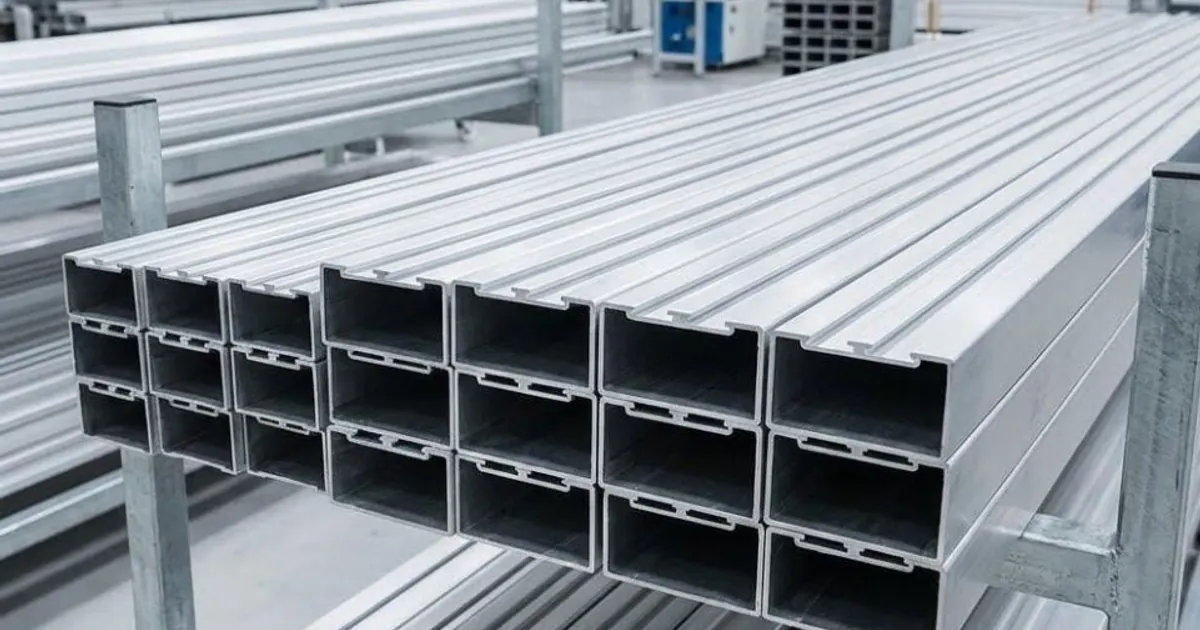
Flimsy, thin-walled local aluminium sections (0.8mm to 1.0mm) vibrate like drum skins under low-frequency bus rumbles. High-performance soundproofing requires heavy-gauge extrusions:
- Wall Gauge: Minimum 1.5mm to 2.2mm wall thickness in certified 6063-T6 alloy.
- Heavy Profile Geometry: Multi-chambered European Domal frames provide dense structural mass that dampens acoustic wave vibrations.
- Glass Pocket Depth: Frame tracks must feature wide 28mm to 36mm glazing pockets capable of supporting thick, heavy acoustic double-glazed units.
Pillar 2: Acoustic Glazing Configuration (The Sound Destroyer)
The glass panel accounts for over 80% of a window's surface area. Simply using standard double glazing is often inadequate because two panes of equal thickness (e.g., 6mm + 6mm) share the same resonant frequency, allowing specific sound pitches to pass straight through.
| Glass Specification | STC Rating | Perceived Noise Reduction | Performance Assessment |
|---|---|---|---|
| Standard Single 5mm Toughened Glass | 26 – 28 dB | Minimal (≈ 20%) | Poor (Street conversations clearly audible) |
| Standard Symmetrical DGU (6mm + 12 Air + 6mm) | 32 – 35 dB | Moderate (≈ 50%) | Good thermal insulation, moderate traffic dampening |
| Asymmetric DGU (8mm + 12 Argon + 6mm) | 37 – 40 dB | Substantial (≈ 70%) | Different pane thicknesses break resonance dips |
| Acoustic Laminated DGU (6mm + 16 Argon + 8.76mm PVB) | 44 – 48+ dB | Near-Total Silence (≈ 88–92%) | Gold Standard (Aircraft, highway & metro line isolation) |
Pillar 3: Triple EPDM Gaskets & Multi-Point Compression Locks
Acousticians have a famous maxim: "Where air can go, sound can go." Even a 1mm gap around a window sash leaks up to 50% of incoming acoustic energy.
- Casement vs. Sliding: Casement and Tilt & Turn windows inherently provide superior soundproofing because closing the handle mechanically pulls the sash tightly against dual or triple continuous EPDM compression gaskets. In contrast, sliding windows rely on wool pile weatherstripping, which allows minor acoustic leakage.
- High-Performance Acoustic Sliding Systems: If sliding windows are architecturally necessary, specify heavy Domal sliding sections fitted with multi-fin weatherstrips, interlock PVC wind-stops, and bottom track water-sealing baffles.
- Multi-Point Locking Hardware: Operates 3 to 5 perimeter locking cams with a single handle turn, compressing the rubber gasket evenly along the entire perimeter.
Installation Watch-Out: Sealing the Perimeter Gap
You can invest in the finest acoustic aluminium window in the world, but if your local fabricator simply fills the 10mm perimeter gap between the aluminium frame and the brick wall with white cement, noise will flank straight around the window.
Professional acoustic installation requires expanding high-density acoustic polyurethane (PU) foam inside the gap, followed by a continuous bead of non-hardening acoustic neutral silicone sealant on both interior and exterior perimeters.
Frequently Asked Questions
Can an aluminium sliding window be truly soundproof?
A well-engineered sliding window using heavy Jindal Domal sections, high-density silicone wool piles, and asymmetric DGU glass can achieve noise reductions of 34 to 38 dB, which is sufficient for most residential suburban settings. However, for maximum acoustic silence (42 to 48 dB along major flyovers or railway lines), hinged casement or tilt & turn windows with compression rubber gaskets are strongly recommended.
Does filling the DGU cavity with Argon gas improve soundproofing?
Argon gas primarily enhances thermal insulation (reducing heat transfer by lowering the U-value). For acoustic attenuation, argon provides only a minor 1 to 2 dB improvement over dry air. The true acoustic drivers are glass pane thickness variation (asymmetry), acoustic PVB lamination, and the width of the cavity (ideally 12mm to 16mm).
Where can I source genuine heavy-gauge Domal sections in Delhi NCR?
Imperial Metal Mart stocks full inventories of authentic Jindal Aluminium Domal window profiles, casement stiles, deep tracks, and heavy-duty sliding accessories in Paharganj, New Delhi, with guaranteed wall thicknesses and factory test certificates.
Build Quiet, Soundproof Spaces with Imperial Metal Mart
Explore our heavy-gauge Jindal Aluminium Domal and Casement sections engineered for deep DGU acoustic glazing and whisper-quiet indoor environments.