

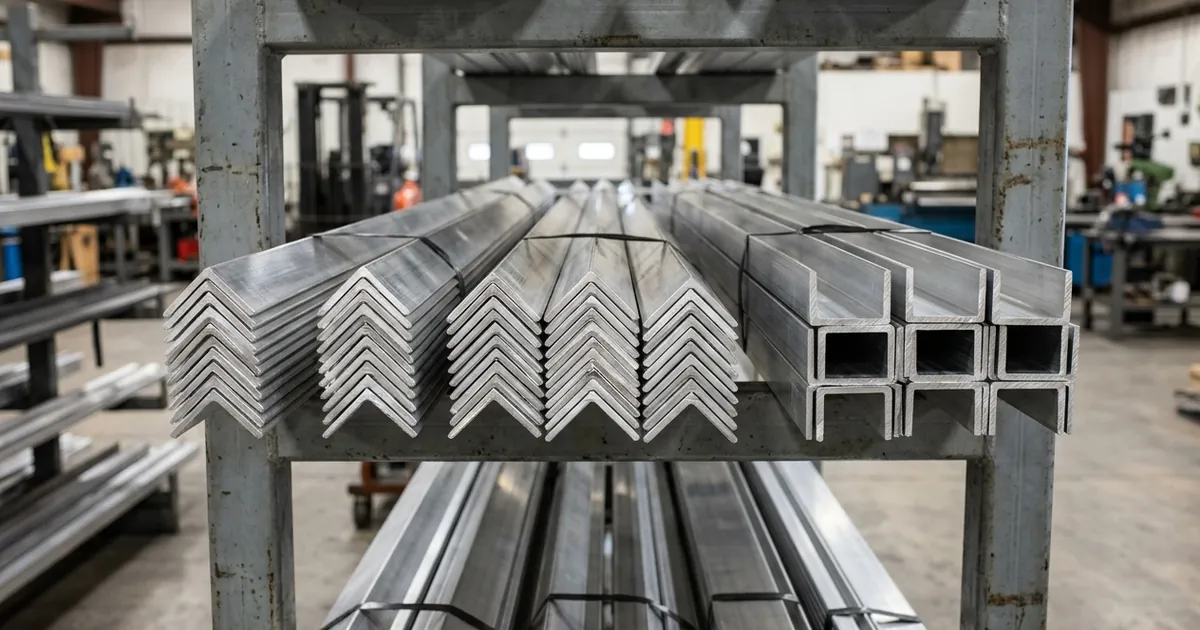
In architectural interior fit-outs, glass facade framing, commercial display racking, and electrical sub-framing, extruded aluminium angles and channels are the fundamental structural connectors of modern construction.
Manufactured from prime virgin billets by Jindal Aluminium Limited, Jindal Aluminium angles and channelsoffer sharp dimensional accuracy, 100% rust immunity in outdoor monsoons, and crisp 90° right angles that eliminate crooked framing alignment on site.
Whether you are installing 10mm toughened glass partitions using continuous bottom U-channels, protecting drywall corners with sleek anodized L-angles, or framing exterior architectural louvers, understanding standard catalog dimensions and joining methods ensures rapid, defect-free site assembly.
The 3 Core Extruded Profiles in the Jindal Catalogue
Jindal extrudes angles and channels across three standardized geometric profiles available in standard 3.66-meter (12-foot) lengths:
1. Equal L-Angles
Features identical leg dimensions on both sides (Leg A = Leg B). Creates balanced, uniform 90° corners ideal for structural framing bracing, shelving edge supports, and column corner guards.
Popular Dimensions:19×19mm, 25×25mm, 38×38mm, 50×50mm, and 75×75mm with wall gauges from 1.5mm up to 6.0mm.
2. Unequal L-Angles
Features one longer vertical leg and one shorter horizontal leg (Leg A ≠ Leg B). Used when one plane requires greater vertical load support or when mounting space is limited in one direction.
Popular Dimensions:38×25mm, 50×25mm, 75×38mm, and 100×50mm.
3. Extruded U-Channels & C-Channels
Three-sided rectilinear channel profiles with a continuous bottom base and two upright side flanges. Engineered specifically to capture and clamp glass panels, partition boards, acoustic ceiling baffles, and electrical cable runs.
Popular Dimensions:12×12×12mm, 25×25×25mm, 38×25×25mm, and 50×25×25mm.
Standard Dimensions & Application Reference Table
Below is a master dimensional reference chart of popular Jindal Aluminium angle and channel sections regularly stocked in Paharganj, New Delhi:
| Profile Category | Leg / Base Dimensions (mm) | Wall Thickness (mm) | Recommended Commercial Application |
|---|---|---|---|
| Equal L-Angle | 19.05 × 19.05 mm (3/4" × 3/4") | 1.50 mm | Light display cabinets, picture framing, interior trim |
| Equal L-Angle | 25.40 × 25.40 mm (1" × 1") | 2.00 mm | Drywall corner protection, modular furniture edging |
| Equal L-Angle | 38.10 × 38.10 mm (1.5" × 1.5") | 3.00 mm | Office partition sub-framing, signage support frames |
| Equal L-Angle | 50.80 × 50.80 mm (2" × 2") | 4.00 mm | Industrial machinery bracing, solar racking brackets |
| Unequal L-Angle | 50.80 × 25.40 mm (2" × 1") | 3.00 mm | Fascia trims, suspended ceiling perimeters, shelf ledges |
| Unequal L-Angle | 76.20 × 38.10 mm (3" × 1.5") | 4.00 mm | Heavy facade bracket anchors, curtain wall transoms |
| Glazing U-Channel | 19.05 × 12.70 mm | 1.50 mm | Holding 8mm to 10mm glass shower enclosures |
| Structural U-Channel | 38.10 × 25.40 mm | 3.00 mm | Base track for 12mm office glass partitions |
Workshop Joinery & Fastening Best Practices
To build rigid, square assemblies using aluminium angles and channels:
- Precision 45° Mitre Sawing: Always cut angles on high-speed circular mitre saws fitted with negative rake carbide-tipped blades. This leaves smooth, razor-sharp edges that join seamlessly without gaps.
- Internal Corner Cleat Brackets: When forming 90° frames, insert extruded internal corner cleats and lock them with countersunk stainless steel machine screws or heavy-duty blind pop rivets.
- Glazing EPDM Rubber Isolators: When inserting glass into aluminium U-channels, always use continuous EPDM rubber setting blocks and side gaskets. Direct glass-to-aluminium contact can cause stress cracks when buildings vibrate.
- Concrete Fastening: Anchor perimeter U-channels into concrete slabs using high-grade nylon expansion plugs with stainless steel screws spaced every 400mm to 500mm.
Frequently Asked Questions
What finishes are available for Jindal angles and channels?
Jindal angles and channels are stocked in Mill Finish (raw extruded silver), Natural Matte Anodized (silver), Bronze/Champagne Anodized, and Powder Coated finishes in RAL shades including Matte Black (RAL 9005) and Pure White (RAL 9016).
Can aluminium angles be used outdoors in direct rain?
Yes. Aluminium naturally forms a protective transparent oxide coating upon exposure to air, making it 100% rustproof. Unlike mild steel angles that rust and stain walls during monsoons, aluminium angles remain rust-free for decades outdoors with zero painting required.
Where can I download the complete Jindal angles catalogue?
You can view technical drawings and download the full catalog directly from Imperial Metal Mart's online Jindal Aluminium Catalogue page, or request an instant quotation via WhatsApp.
Source Genuine Jindal Angles & Channels in Delhi NCR
Imperial Metal Mart stocks full inventories of equal L-angles, unequal angles, and U-channels in Paharganj, New Delhi, available in standard 12-foot bundles for immediate site dispatch.